1.
Introduction
Acne, a prevalent
and chronic inflammatory skin condition, primarily results from increased
sebum production induced by androgens, abnormal follicular keratinization,
inflammation, host immune reactions, and the presence of Propionibacterium
acnes[1] . Approximately 80% of young
adults and adolescents are clinically distinguished by the emergence of
primary manifestations such as blackheads, whiteheads, papules, and pustules[2].
Currently, there are ways for treating acne, including topical approaches
(such as vitamin A analogs, antibiotics, salicylic acid, benzoyl peroxide,
chemical peels)[3, 4],
systemic methods (comprising vitamin A analogs, antibiotics, hormones,
isotretinoin, corticosteroids) [5, 6],
and physical interventions (e.g., comedone
extraction, cryotherapy, cryosurgery, electrocautery) [7-9].
However, due to the growing resistance of acne to antibiotic and hormonal
treatments, the efficacy and safety of conventional therapies are not satisfactory
[10]. Therefore, there is a need
to explore more natural and safe complementary and
alternative medicine (CAM) approaches for acne treatment.
Digupi is a traditional Chinese herbal medicine sourced
from the root bark of Lycium barbarum
[11].
It is characterized by a bitter taste and cold properties. It has been
employed in traditional Chinese medicine for the treatment of conditions such
as night sweats due to deficiency, pulmonary heat-induced coughing and
wheezing, hemoptysis, hematuria, polydipsia, carbuncles, and ulcers[12, 13]
. The chemical composition of Digupi is notably
diverse, featuring a unique structural profile, and includes compounds such as
terpenes, sterols, organic acids, phenolic compounds, alkaloids, and cyclic
peptides[14]. Modern pharmacological
studies have revealed that crude extracts or individual components of Digupi exhibit a range of pharmacological activities,
including the treatment of acne, blood glucose reduction, blood pressure
lowering, lipid-lowering, antibacterial, and antiviral effects [15]. However, the specific
molecular mechanisms underlying the use of Digupi in
acne treatment remain unclear.
Network
pharmacology is a new discipline based on the theory of systems biology to
design multi-target drug molecules for specific signaling nodes (Nodes).
Precise and effective therapeutic intervention is achieved by synergistic multicompound network pharmacology and drug repurposing,
obviating the need for drug discovery and speeding up clinical translation[16].
Molecular dynamics (MD) simulations have led to great advances in many
scientific disciplines, such as chemical physics, materials science, and
biophysics. This computational methodology has demonstrated high relevance in
the detailed characterization of biomolecular systems, including
complementarity with experimental data, experimental design optimization, and
prediction of relevant properties for chemical systems that are expensive or
difficult to handle experimentally. Among many applications, it has been
employed to characterize disease development processes and has been used in
the initial stages of drug design and development[17]. We utilized network
pharmacology analysis and molecular dynamics (MD) simulations to identify the
bioactive components associated with Digupi and
predict the core targets and pathways involved in the Digupi’s
treatment of acne.
2. Materials and methods
2.1 Screening of active ingredients and potential
targets of Digupi
The identification
of active constituents in Digupi involved the
utilization of the Traditional Chinese Medicine Systems Pharmacology database
and analysis platform (TCMSP, https://old.tcmsp-e.com/tcmsp)[18]. Criteria for selection
encompassed an oral bioavailability (OB) equal to or greater than 30% and a
drug-likeness (DL) score of 0.18 or higher[19]. Additionally, gene names
were annotated utilizing the Uniprot database (https://www.uniprot.org/).
2.2 Screening of acne-related Targets
To obtain targets
associated with acne, a comprehensive search was performed in the GeneCard database (https://www.genecards.org/), Online
Mendelian Inheritance in Man (OMIM, https://omim.org), and DisGeNET
(https://www.disgenet.org) databases using the keyword "acne".
Candidate targets were selected based on a reference score exceeding 30
points, while eliminating any duplicate targets.
2.3 Acquiring potential targets for acne treatment with
dermatophytes
To determine
potential therapeutic targets for Digupi in patients
with acne, a cross-target analysis was performed utilizing the Venn tool
(https://bioinfogp.cnb.csic.es/tools/venny/). Subsequently, a network titled
"Drug Component-Potential Targets" was constructed using Cytoscape 3.7.2 software (https://cytoscape.org/).
2.4 Construction of protein-protein interaction network
(PPI) and core target screening
We imported the
cross-targets into the STRING database (https://string-db.org/), with a
confidence threshold set at 0.4, and removed unrelated nodes from the network.
Data downloaded from the STRING database were further
utilized in Cytoscape software and the Metascape database to construct a protein target network.
Some target proteins in cell biology activities are closely related and
have the same or similar functions; these target proteins can be considered a
cluster. Proteins in the same cluster are generally considered to play a
synergistic role in disease progression. The MCC (Maximum Clique
Centrality) algorithm from the Cytohubba plugin was
employed to compute cluster associated with Digupi
treatment for acne[20]. Finally, the top 10 core
targets were presented[19].
2.5 GO and KEGG enrichment analysis
This section provides
details of the methodology used along with information on any previous efforts
with corresponding references. Any details for further modifications and research should be included.
Sufficient details should be provided to the reader about the original data
source in order to enable the analysis, appropriateness and verification of
the results reported in the study.
2.6 Molecular docking
This section provides
details of the methodology used along with information on any previous efforts
with corresponding references. Any details for further modifications and research should be included.
Sufficient details should be provided to the reader about the original data
source in order to enable the analysis, appropriateness and verification of
the results reported in the study.
2.7 Molecular dynamics (MD) simulations
As the screening criterion of the binding
energy ≤ -9.0kJ/mol, the
optimal docking combination was selected for dynamic simulation[20]. The protein was separated from the small molecule ligand, and a small
molecule force field file was generated using the antechamber tool in Ambertools software, and the file was converted into a gromacs force field file using the acpype
software. Small molecules were subjected to GAFF force field, while proteins
were subjected to AMBER14SB force field and TIP3P
water model. The files of proteins and small molecule ligands were merged to
construct a simulation system for the complex. Then, GROMACS 2023.2 software
was used to identify the complex. After energy minimization, the system
underwent 100 ps of equilibration under both NVT and
NPT conditions, followed by a 100 ns MD production run with coordinate saving
at 2 fs intervals. Analysis of the final trajectory included measurements of
root mean square deviation (RMSD), root mean square fluctuation (RMSF), and
hydrogen bonds using GROMACS modules[21].
3. Results
3.1 The
effective components and targets of digupi.
Digupi was screened for its active ingredients and targets
in the Traditional Chinese Medicine Ingredients Database (TCMID). A total of
12 active ingredients were obtained, including aurantiamide,
scopolin, hyoscyamine, stigmasterol, linoleyl acetate, linarin,
cholesterol, hederagenin, beta-sitosterol, sugiol,
acacetin, atropine. Duplicates were removed, resulting in a total of 87
relevant targets(Figure 1).
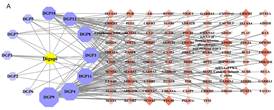
Fig. (1). If a figure is in
separate parts, all parts of the figure must be provided in a single composite
illustration file.
3.2 The targets
related to acne
A total 695
acne-associated targets were obtained from the DisGeNET,
GeneCards, and OMIM databases based on a relevance
score of ≥30[19].
3.3 Acquisition
of potential targets and construction of a "drug component-potential
target" network network
The Venn tool was
used to intersect the target genes of the active components of Digupi with acne-related genes, resulting in 13 potential
target genes (Figure 2A) (Table 1). Furthermore, a network diagram of active
herbal components was established (Figure 2B), where blue represents the
active components, and orange represents the corresponding target proteins for
these active components. From the diagram, it is evident that beta-sitosterol,
hederagenin, and acacetin play prominent roles in Digupi.
Table 1. Common targets of active ingredient
and Acne
|
nunmber
|
co-targets
|
|
1
|
PTGS1
|
|
2
|
PTGS2
|
|
3
|
RXRA
|
|
4
|
NOS2
|
|
5
|
AR
|
|
6
|
DPP4
|
|
7
|
BCL2
|
|
8
|
TP53
|
|
9
|
CYP19A1
|
|
10
|
F2R
|
|
11
|
KCNH2
|
|
12
|
PRKCA
|
|
13
|
TGFB1
|
3.4 Construction
of PPI and core target screenings
The STRING database
was utilized to obtain protein-protein interaction relationships among the
potential targets, as depicted in Figure 3A. The network consisted of 12 nodes
(excluding one independent target) and 30 edges, with nodes representing
proteins and edges representing protein associations. To further analyze this
network, it was imported into Cytoscape, where the
MCODE plugin and the Metascape database were
employed to identify core networks and hub proteins. Notably, the central
targets in the protein-protein interaction network obtained from the STRING
database included PTGS2, TP53, and PRKCA, as shown in Figure 3B. Meanwhile, the
central targets in the protein-protein interaction network from the Metascape database were TGFB1, PRKCA, TP53, AR, and PTGS2
(Figure 3C).
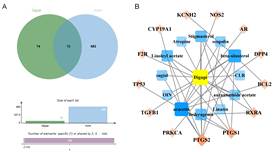
Fig. (2). If a figure is in
separate parts, all parts of the figure must be provided in a single composite
illustration file.
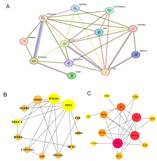
Fig. (3). If a figure is in
separate parts, all parts of the figure must be provided in a single composite
illustration file.
3.5 Results of
enrichment analysis of Digupi in the treatment of
acne
The GO analysis
revealed that the enrichment of Biological Processes (BP) encompassed
regulatory processes related to blood circulation, negative regulation of cell
proliferation and migration, response to steroid hormone, regulation of system
process, positive regulation of cell migration, response to hypoxia, negative
regulation of cell migration, olefinic compound metabolic process, cellular
response to xenobiotic stimulus, and organ growth. Cellular Components (CC)
were mainly associated with the perinuclear cytoplasmic region and membrane
rafts. Molecular Functions (MF) primarily involved protein homodimerization
activity, protein domain specific binding, and heme binding. Additionally, the
KEGG enrichment analysis revealed that the therapeutic effects of Digupi on acne were primarily linked to pathways,
including cancer, the PI3K-Akt signaling pathway, lipid and atherosclerosis,
the AGE-RAGE signaling pathway in diabetic complications, the sphingolipid
signaling pathway, the thyroid hormone signaling pathway, the MAPK signaling
pathway, the HIF-1 signaling pathway, and the relaxation signaling pathway
(Figure 4A). Furthermore, a drug-compound-key target-pathway network was
constructed using Cytoscape (Figure 4B).
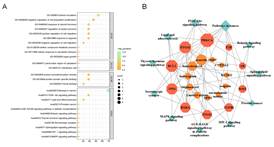
Fig. (4). If a figure is in
separate parts, all parts of the figure must be provided in a single composite
illustration file.
3.6 Molecular
docking results
Docking was
performed between three components of Digupi (acacetin,
beta-sitosterol, and hederagenin) and five key targets (PRKCA, TP53, AR,
PTGS2, and BCL2). The more stable the binding between the ligand and the
receptor, the lower the binding energy of the two. Normally the binding energy
≤-6 kcal/mol can illustrate the ligand and receptor have strong connection[20], The
binding energies of the active components with the receptors are presented in
Table 2. Figure 5 illustrates the top 5 molecular docking results based on
binding energies.
Table 2. Binding energies
of components and receptors
|
Ligand
|
protein
|
Score
|
|
acacetin
|
PRKCA
|
-7.1
|
|
acacetin
|
TP53
|
-7.4
|
|
acacetin
|
AR
|
-8.7
|
|
acacetin
|
PTGS2
|
-9.3
|
|
acacetin
|
BCL2
|
-6.8
|
|
beta-sitosterol
|
PRKCA
|
-7.5
|
|
beta-sitosterol
|
TP53
|
-6.6
|
|
beta-sitosterol
|
PTGS2
|
-9.9
|
|
beta-sitosterol
|
BCL2
|
-6.4
|
|
hederagenin
|
PRKCA
|
-7.7
|
|
hederagenin
|
PTGS2
|
-9.6
|
3.7 Molecular
dynamics (MD) simulations results
MD simulation can be
exploited to visualize the real movement and structural modifications of a
protein in a biological system. MD trajectories can be evaluated by
calculation of Root-Mean-Square Deviation (RMSD) and the Root Mean Square
Fluctuation (RMSF) of the compounds.The RMSD
parameter which is the rate of the mean distance between the atoms is required
for examining the equilibration and the structural stability of the protease in the
presence of a docked ligand. The variation of flexibility in terms of RMSF
parameter can be utilized to investigate inhibitor binding to the target,
higher RMSF values mean that the protein has more flexible domains. The
hydrogen bond is critical in providing a stable foundation for biological
systems[22].
The MD simulation trajectories may be used to compute the hydrogen bonds in
drug-protein combinations[23].
Assessment of RMSD outputs for acne main receptor PTGS2 and components
acacetin, beta-sitosterol and hederagenin demonstrates the stability of the
combinations. It was observed that all three components reach stability, the
value of RMSD remains stable in the range of 0.10-0.30. And the results of
RMSF describe the stability of protein and components. Fewer oscillations have
been perceived in the later stage, maybe related to protein conformational
adjustment. The hydrogen bonding results show that the number of hydrogen
bonds in hederagenin and PTGS2 is distributed between 0-3, the number of
hydrogen bonds in beta-sitosterol and PTGS2 is distributed between 0-2, and
the number of hydrogen bonds in acacetin and PTGS2 is distributed between 0-6,
which is relatively stable.(Figure 6)
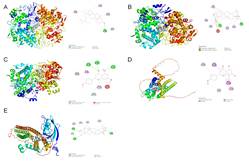
Fig. (5). If a figure is in
separate parts, all parts of the figure must be provided in a single composite
illustration file.
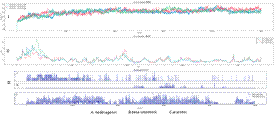
Fig. (6). If a figure is in
separate parts, all parts of the figure must be provided in a single composite
illustration file.
4. Discussion
Acne, a prevalent
inflammatory skin condition characterized by pustules, papules, pimples, and
blackheads, can also significantly impact individuals' psychological
well-being and overall quality of life[24, 25].
Given the adverse effects and growing drug resistance associated with current
acne treatments, there is an imminent need for the discovery of safe and
effective anti-acne medications.
Teratogenicity associated with retinoids, cutaneous adverse effects of
topical anti-acne medications, and lack of long-term remission induction are a
few hindrances that have to be tackled by novel therapies.In
this investigation, we aimed to elucidate the intricate signaling pathways and
networks involving acacetin, beta-sitosterol, and hederagenin(the ingredients
of Digupi)by integrating data from publicly
available sources related to Digupi and acne.
Furthermore, we sought to predict the interactions between Digupi and potential protein targets associated with
acne. Research has indicated that digupi has the
potential to modulate key targets including PRKCA, TP53, AR, PTGS2, BCL2, as
well as other critical targets by interacting with diverse chemical
components, such as acacetin, beta-sitosterol, hederagenin, and more. This
interaction results in a multi-faceted, multi-networked approach for achieving
anti-acne effects. Notably, acacetin, a dihydroxy and mono methoxyflavonoid,
exhibits properties with anticancer, anti-inflammatory, anti-infective, and
therapeutic potential for metabolic diseases [26].
Beta-sitosterol modulates multiple cell signaling
pathways, such as apoptosis, proliferation, invasion, angiogenesis, and
metastasis, resulting in its diverse pharmacological effects, which encompass
anti-inflammatory, anticancer, antioxidant, and antidiabetic properties [27].
Furthermore, Ersilia Tolino et al. demonstrated a significant improvement in
efficacy among acne patients through the use of
topical creams enriched with beta-sitosterol as an ingredient [28].
Hederacanthin (HG), a pentacyclic triterpenoid found
in various medicinal plants, exhibits a range of pharmacological effects,
including anticancer, anti-inflammatory, antidepressant, antidiabetic,
antihyperlipidemic, and antiviral activities [29].
In summary, acacetin, beta-sitosterol, and hederagenin may play important
roles in the treatment of acne as important components of digupi.
In addition, molecular docking showed that PTGS2 had the lowest binding energy
and more stable intermolecular binding with acacetin, beta-sitosterol, and
hederagenin. Prostaglandin Endoperoxide Synthase 2 (PTGS2, also known as
COX-2) has been shown to be a mediator of inflammation and oxidative stress
induced by Propionibacterium acnes [30],
and to play an important role in the pathology associated with inflammatory
signaling [31].
In addition, several anti-acne drugs such as Punica granatum [32],
Knautia drymeia Heuff [33],
Pyrrolidine dithiocarbamate [34]
and Kaempferia [35]
target PTGS2, and the use of all of these drugs reduces PTGS2 expression;
therefore, PTGS2 may be a key target of digupi in
the treatment of acne.
In addition,
enrichment analysis showed that digupi targets
associated with acne were mainly enriched in the PI3K-Akt signaling pathway,
lipid and atherosclerosis, AGE-RAGE signaling pathway in diabetic
complications, sphingolipid signaling pathway, and thyroid hormone signaling
pathway, among other pathways. Primary factors contributing to the development
of acne vulgaris encompass increased sebum production, disrupted
keratinization in follicular sebaceous gland ducts, the presence of
Propionibacterium acnes, and associated inflammation [36].
Lipids can influence both bacterial growth and the host immune response.
Lipids that accumulate within the follicular duct undergo oxidation via a
lipase enzyme produced by Cutibacterium acnes (C.
acnes), thereby promoting bacterial proliferation [37].
The phosphatidylinositol 3-kinase (PI3K)/protein kinase B (Akt) signaling
pathway regulates various cellular processes, including cell growth,
proliferation, migration, angiogenesis, and skin development, and it holds
significant relevance in the pathogenesis of acne [38, 39].
The dysregulated phosphatidylinositol-3-kinase (PI3K)-Akt-mammalian target of
rapamycin (mTOR) signaling pathway has been implicated in various
immune-mediated inflammatory and hyperproliferative dermatoses such as acne,
atopic dermatitis, alopecia, psoriasis, wounds, and vitiligo, and is
associated with poor treatment outcomes. Several studies have revealed that
certain natural products and synthetic compounds can obstruct the
expression/activity of PI3K/Akt/mTOR, underscoring their potential in managing
common and persistent skin inflammatory disorders [40].
Activation of the AGE-RAGE signaling pathway triggers a cascade of
pathological events, including inflammation, oxidative stress, cell
proliferation, and apoptosis, which are intricately involved in the
development of diabetic complications. Consequently, the AGE-RAGE signaling
pathway may also contribute to the pathogenesis of acne [41, 42].
Thyroid hormones play a pivotal role in the growth and differentiation of
follicular sebaceous gland units (PSUs), and elevated circulating thyroxine
levels have been associated with increased sebum secretion and the formation
of acne [43, 44].
Therefore, Digupi may potentially impact acne
development through its influence on these pathways.
This study also has
several limitations. Firstly, the research approach based on network
pharmacology cannot accurately predict whether the targets are upregulated or
downregulated in the disease, and it may not provide a precise understanding
of the mechanisms underlying the action of targets in the disease. Secondly,
our study primarily relies on data from databases and network analyses, which
may impact the accuracy of the data. Further experiments will be conducted to
elucidate the specific molecular functions and mechanisms by which Digupi affects acne.
5. Conclusion
In this study, the
mechanisms by which digupi affects acne were
analyzed using network pharmacology. The findings demonstrated that Digupi's anti-acne treatment exhibits a multifaceted
pharmacological effect involving multiple components, targets, and pathways.
Additionally, molecular docking analysis substantiated the validity of the
predictions made using a network pharmacology-based approach. Notably, this
study provides a valuable foundation for understanding the therapeutic role of
digupi in acne.
Ethical Approval
not applicable.
Funding
This research received no external funding.
Institutional Review Board Statement
Not applicable.
Data Availability Statement
The data that support the findings of this study are
openly available in [TCMSP] at https://old.tcmsp-e.com/tcmsp, [Uniprot database] at https://www.uniprot.org/, [GeneCard database] at https://www.genecards.org/, [OMIM] at
https://omim.org, [DisGeNET] at https://www.disgenet.org, [Venn
tool] at https://bioinfogp.cnb.csic.es/tools/venny/, [Cytoscape 3.7.2 software] at https://cytoscape.org/, [STRING
database] at https://string-db.org/, [Metascape database] at https://metascape.org, and [RCSB
PDB database] at http://www.rcsb.org .
Acknowledgments
Over the course of my
researching and writing this paper, I would like to express my thanks to all
those who have helped me.
First, I
would like express my gratitude to all those who
helped me during the writing of this thesis. A special acknowledgement
should be shown to Professor Chang-Xi Zhang, from whose lectures I benefited
greatly, I am particularly indebted to Mr. Zhang who gave me kind encouragement
and useful instruction all through my writing. Sincere gratitude should also go
to all my learned Professors and warm-hearted teachers who have greatly helped
me in my study as well as in my life.
And my
warm gratitude also goes to my friends and family who gave me much
encouragement and financial support respectively.
Moreover,
I wish to extend my thanks to the library and the electronic reading room for their providing much useful information for my thesis.
Conflicts of Interest
The
authors declare no conflict of interest.
References
1. Williams
HC, Dellavalle RP, Garner S: Acne
vulgaris. Lancet 2012, 379(9813):361-372.
2. Strauss
JS, Krowchuk DP, Leyden JJ, Lucky AW, Shalita AR, Siegfried EC, Thiboutot DM,
Van Voorhees AS, Beutner KA, Sieck CK, Bhushan R: Guidelines of care for acne vulgaris management. J Am Acad Dermatol 2007, 56(4):651-663.
3. Gollnick
HP, Krautheim A: Topical treatment in
acne: current status and future aspects. Dermatology 2003, 206(1):29-36.
4. Krautheim
A, Gollnick H: Transdermal penetration
of topical drugs used in the treatment of acne. Clin Pharmacokinet 2003, 42(14):1287-1304.
5. Katsambas
A, Papakonstantinou A: Acne: systemic
treatment. Clin Dermatol 2004, 22(5):412-418.
6. Zouboulis
CC, Piquero-Martin J: Update and future
of systemic acne treatment. Dermatology
2003, 206(1):37-53.
7. Thomson
KF, Goulden V, Sheehan-Dare R, Cunliffe WJ: Light cautery of macrocomedones under general anaesthesia. Br J Dermatol 1999, 141(3):595-596.
8. Steventon
K: Expert opinion and review article:
The timing of comedone extraction in the treatment of premenstrual acne--a
proposed therapeutic approach. Int J
Cosmet Sci 2011, 33(2):99-104.
9. Kim
RH, Armstrong AW: Current state of acne
treatment: highlighting lasers, photodynamic therapy, and chemical peels. Dermatol Online J 2011, 17(3):2.
10. Urushibara
T, Okamoto T, Nishimura C, Kamimura T, Osaki Y, Yamaguchi K, Hata T, Miura K: Methylation of 5'-5' confronting
dinucleotides by vaccinia associated enzyme system. Nucleic Acids Symp Ser 1981(10):237-240.
11. Ragab
OG, Mamdouh D, Bedair R, Smetanska I, Gruda NS, Yousif SKM, Omer RM, Althobaiti
AT, Abd El-Raouf HS, El-Taher AM et al:
Distinguishing features of Lycium L.
species (family Solanaceae) distributed in Egypt based on their anatomical,
metabolic, molecular, and ecological characteristics. Front Plant Sci 2023, 14:1162695.
12. Wu
PY, Li TM, Chen SI, Chen CJ, Chiou JS, Lin MK, Tsai FJ, Wu YC, Lin TH, Liao CC et al: Complementary Chinese Herbal Medicine Therapy Improves Survival in
Patients With Pemphigus: A Retrospective Study From a Taiwan-Based Registry.
Front Pharmacol 2020, 11:594486.
13. Yao
X, Peng Y, Xu LJ, Li L, Wu QL, Xiao PG: Phytochemical
and biological studies of Lycium medicinal plants. Chem Biodivers 2011, 8(6):976-1010.
14. Ma
D, Li X, Wu M, Jia Y, Song Y, Liu N, Li S: Metabonomics
Approach in Studying the Difference of Lycii Cortex and Varieties with Similar
Origin. Journal of Food and Nutrition
Research 2022, 10(3):242-249.
15. Potterat
O: Goji (Lycium barbarum and L.
chinense): Phytochemistry, pharmacology and safety in the perspective of
traditional uses and recent popularity. Planta
Med 2010, 76(1):7-19.
16. Nogales
C, Mamdouh ZM, List M, Kiel C, Casas AI, Schmidt H: Network pharmacology: curing causal mechanisms instead of treating
symptoms. Trends Pharmacol Sci 2022,
43(2):136-150.
17. Filipe
HAL, Loura LMS: Molecular Dynamics
Simulations: Advances and Applications. Molecules
2022, 27(7).
18. Ru
J, Li P, Wang J, Zhou W, Li B, Huang C, Li P, Guo Z, Tao W, Yang Y et al: TCMSP: a database of systems pharmacology for drug discovery from
herbal medicines. J Cheminform 2014,
6:13.
19. Ma
Q, Zhang A-n, Zhang C-x: Exploration of
the Pharmacological Mechanism of Bufei Nashen Pill in Treating Chronic
Obstructive Pulmonary Disease Using Network Pharmacology Integrated Molecular
Docking. Natural Product
Communications 2022, 2022(11).
20. Ye
J, Li L, Hu Z: Exploring the Molecular
Mechanism of Action of Yinchen Wuling Powder for the Treatment of
Hyperlipidemia, Using Network Pharmacology, Molecular Docking, and Molecular
Dynamics Simulation. Biomed Res Int 2021,
2021:9965906.
21. Bera
I, Payghan PV: Use of Molecular Dynamics
Simulations in Structure-Based Drug Discovery. Curr Pharm Des 2019, 25(31):3339-3349.
22. Ghahremanian
S, Rashidi MM, Raeisi K, Toghraie D: Molecular
dynamics simulation approach for discovering potential inhibitors against
SARS-CoV-2: A structural review. J
Mol Liq 2022, 354:118901.
23. Chowdhury
KH, Chowdhury MR, Mahmud S, Tareq AM, Hanif NB, Banu N, Reza A, Emran TB,
Simal-Gandara J: Drug Repurposing
Approach against Novel Coronavirus Disease (COVID-19) through Virtual Screening
Targeting SARS-CoV-2 Main Protease. Biology
(Basel) 2020, 10(1).
24. Thiboutot
D, Gollnick H, Bettoli V, Dréno B, Kang S, Leyden JJ, Shalita AR, Lozada VT,
Berson D, Finlay A et al: New insights into the management of acne:
an update from the Global Alliance to Improve Outcomes in Acne group. J Am Acad Dermatol 2009, 60(5 Suppl):S1-50.
25. Fox
L, Csongradi C, Aucamp M, du Plessis J, Gerber M: Treatment Modalities for Acne. Molecules
2016, 21(8).
26. Singh
S, Gupta P, Meena A, Luqman S: Acacetin,
a flavone with diverse therapeutic potential in cancer, inflammation,
infections and other metabolic disorders. Food Chem Toxicol 2020, 145:111708.
27. Khan
Z, Nath N, Rauf A, Emran TB, Mitra S, Islam F, Chandran D, Barua J, Khandaker
MU, Idris AM et al: Multifunctional roles and pharmacological
potential of β-sitosterol: Emerging evidence toward clinical applications. Chem Biol Interact 2022, 365:110117.
28. Tolino
E, Skroza N, Mambrin A, Bernardini N, Zuber S, Balduzzi V, Marchesiello A,
Proietti I, Potenza C: Novel combination
for the treatment of acne differentiated based on gender: a new step towards
personalized treatment. G Ital
Dermatol Venereol 2018, 153(6):866-871.
29. Zeng
J, Huang T, Xue M, Chen J, Feng L, Du R, Feng Y: Current knowledge and development of hederagenin as a promising
medicinal agent: a comprehensive review. RSC Adv 2018, 8(43):24188-24202.
30. Shan
M, Meng F, Tang C, Zhou L, Lu Z, Lu Y: Surfactin-oleogel
with therapeutic potential for inflammatory acne vulgaris induced by
Propionibacterium acnes. Appl
Microbiol Biotechnol 2022, 106(2):549-562.
31. Martín-Vázquez
E, Cobo-Vuilleumier N, López-Noriega L, Lorenzo PI, Gauthier BR: The PTGS2/COX2-PGE(2) signaling cascade in
inflammation: Pro or anti? A case study with type 1 diabetes mellitus. Int J Biol Sci 2023, 19(13):4157-4165.
32. Lee
CJ, Chen LG, Liang WL, Wang CC: Multiple
Activities of Punica granatum Linne against Acne Vulgaris. Int J Mol Sci 2017, 18(1).
33. Chrząszcz
M, Miazga-Karska M, Klimek K, Dybowski MP, Typek R, Tchórzewska D, Dos Santos
Szewczyk K: The Anti-Acne Potential and
Chemical Composition of Knautia drymeia Heuff. and Knautia macedonica Griseb
Extracts. Int J Mol Sci 2023, 24(11).
34. Shin
JH, Kim SS, Seo SR: Pyrrolidine
Dithiocarbamate Suppresses Cutibacterium acnes-Induced Skin Inflammation. Int J Mol Sci 2023, 24(5).
35. Jin
S, Lee MY: Kaempferia parviflora Extract
as a Potential Anti-Acne Agent with Anti-Inflammatory, Sebostatic and
Anti-Propionibacterium acnes Activity. Int
J Mol Sci 2018, 19(11).
36. Kaminester
LH: Acne. Jama 1978, 239(20):2171-2172.
37. Gribbon
EM, Cunliffe WJ, Holland KT: Interaction
of Propionibacterium acnes with skin lipids in vitro. J Gen Microbiol 1993, 139(8):1745-1751.
38. Teng
Y, Fan Y, Ma J, Lu W, Liu N, Chen Y, Pan W, Tao X: The PI3K/Akt Pathway: Emerging Roles in Skin Homeostasis and a Group of
Non-Malignant Skin Disorders. Cells 2021,
10(5).
39. Cong
TX, Hao D, Wen X, Li XH, He G, Jiang X: From
pathogenesis of acne vulgaris to anti-acne agents. Arch Dermatol Res 2019, 311(5):337-349.
40. Roy
T, Boateng ST, Uddin MB, Banang-Mbeumi S, Yadav RK, Bock CR, Folahan JT,
Siwe-Noundou X, Walker AL, King JA et al:
The PI3K-Akt-mTOR and Associated
Signaling Pathways as Molecular Drivers of Immune-Mediated Inflammatory Skin
Diseases: Update on Therapeutic Strategy Using Natural and Synthetic Compounds.
Cells 2023, 12(12).
41. Yan
SF, Ramasamy R, Schmidt AM: Receptor for
AGE (RAGE) and its ligands-cast into leading roles in diabetes and the
inflammatory response. J Mol Med
(Berl) 2009, 87(3):235-247.
42. Ramasamy
R, Yan SF, Schmidt AM: Receptor for AGE
(RAGE): signaling mechanisms in the pathogenesis of diabetes and its
complications. Ann N Y Acad Sci 2011,
1243:88-102.
43. Deplewski
D, Rosenfield RL: Role of hormones in
pilosebaceous unit development. Endocr
Rev 2000, 21(4):363-392.
44. Clayton
RW, Langan EA, Ansell DM, de Vos I, Göbel K, Schneider MR, Picardo M, Lim X,
van Steensel MAM, Paus R: Neuroendocrinology
and neurobiology of sebaceous glands. Biol
Rev Camb Philos Soc 2020, 95(3):592-624.