

The identification of potential inhibitors of SARS-CoV-2 spike protein by virtual screening FDA-approved compound library
Abstract
1. Introduction
T
Coronavirus disease 2019 (COVID-19), caused by severe acute respiratory
syndrome coronavirus (SARS-COV-2), has become the deadliest respiratory disease
after it was first detected in December 2019 in Wuhan, China[1].
Because SARS-COV-2 can be transmitted by aerosols, close contact, respiratory
droplets, and faecal-oral routes, it greatly affects
the global economy, society, healthcare, energy, and environment[2-8].
As of 15 September 2023, there are approximately 690 million confirmed cases
globally, and more than 6.9 million deaths have occurred. Typically, patients
will experience fever, cough, muscle aches, sore throat and diarrhoea,
while severe patients may experience respiratory failure and organ failure[9-11]. The severity of COVID-19 infection is
influenced by the virulence of the SARS-COV-2 variant and the host's immune
response. The National Institutes of Health (NIH) has established a disease
classification system for the degree of COVID-19 infection, with criteria for
asymptomatic, mild, moderate, severe, and critical. These categories are not
mutually exclusive, and patients often progress from one category to the other
over the course of their illness[9]. SARS-CoV-2
encodes four structural proteins: synapsid (S), envelope (E), membrane (M), and
nucleocapsid (N)[12]. The N protein is responsible for binding to the viral
RNA, while the S, E, and M proteins form the envelope[13].
The new coronavirus infects host cells by S protein binding to the
angiotensin-converting enzyme 2 (ACE2) receptor of human cells[14,15].
Thus, the S protein becomes the most promising target for developing drug and
vaccine against SARS-CoV-2.
At
present, in order to curb the battle against COVID-19,
many researchers at home and abroad are actively researching and developing
effective medicines and vaccines. However, the long period, high cost, adverse
reactions and after-effects of the disease have made the research and
development process difficult [16,17]. It is advantageous to use already
marketed drugs to find potentially active compounds against neocoronaviruses.
Computer-aided drug design (CADD) is a technology that uses computational
methods to discover and develop drugs and active molecules with phase-specific
properties. The one of main contributor to CADD is virtual screening (VS) based
on molecular docking [18]. CADD has greatly facilitated drug development in
recent years, not only providing an accelerated pathway to find potential
compounds, but also saving time, money and labour
during the experimental process [19-21].
In
the study, FDA-approved compound library is performed to screen potentially
active compounds based on the S protein of SARS-CoV-2.
2. Materials and methods
2.1 Structure preparation of ligands
3480
FDA-approved compounds from ZINC database were used to screen potential
molecules [22]. Small molecules were prepared using Schrodinger’s LigPrep module of the Schrödinger program [23], which
includes transforming the three-dimensional structure of small molecule,
preserving the original chirality of small molecule, adding hydrogen Chronic Diseases Prevention Review , and
minimization of the structure.
2.2 Structure preparation of the S protein
The
crystal structure of SARS-CoV-2 S protein was downloaded from the Protein Data
Bank (PDB ID: 6M17). The S protein was treated using the Protein Preparation
Wizard module, including the addition of missing side chains and loops,
assigning protonation states and adding hydrogen Chronic Diseases Prevention Review . The OPLS-2005 force
field was selected to minimize the protein.
2.3 Grid generation
The
receptor grids of the S protein were defined by key residues including Tyr449,
Gly496, Gln498, Pro499, Thr500, Asn501, Gly502, Val503, and Tyr505 (Figure 1).
The grids were then generated using the Receptor Grid Generation module.
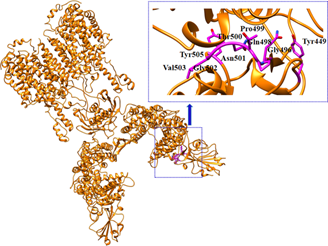
Fig. (1). Crystal
structure of the spike protein of SARS-CoV-2, and the key residues defining
receptor grids of the protein.
2.4 Molecular docking-based virtual screening
Virtual
screening of the S protein was carried out using virtual screening workflow.
The compounds were without reactive functional groups and obeyed Lipinski's
Rule of 5. After that, the obtained compounds were performed to further
evaluate their binding affinity between the S protein and molecules by using
Glide (high throughput virtual screening, HTVS), (standard precision, SP), and
(extra precision, XP).
2.5 Cluster analysis
The
filtered compounds were clustered into 5 classes by Canvas. Finally, combining
the results of docking scoring, and clustering analysis, some candidate
compounds were selected for further structural analysis.
3. Results and discussion
3.1 Molecular docking of remdesivir
Remdesivir
is an antiviral drug authorized to treat mild-to-moderate COVID-19[24].
Therefore, the molecular docking result of remdesivir and S protein was chosen
as a reference and the docking scores was -5.725 kcal/mol. Remdesivir has the
hydrophobic interactions with Leu45, Val445, and Val503 of S protein (Figure
2a). Additionally, remdesivir forms the hydrogen bonds with Asn49 and Asn330 of
S protein (Figure 2b).
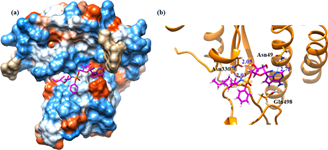
Fig. (2).
Interaction mode of remdesivir with the S protein (a-b). The surface ranging
from orange−red
for the most hydrophobic to dodger blue for the most polar residues, with white
in between.
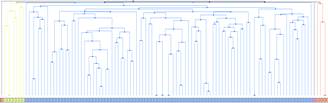
Fig. (3). Cluster
analysis of compounds screened from FDA-approved compound library.
3.2 Screening of FDA-approved compound library
Table
1. The docking scores of candidate compounds binding with the S protein.
|
Chemical
structures |
Compounds |
Docking scores |
|
|
primaquine |
-8.910 |
|
|
Midodrine |
-7.761 |
|
|
Phenylephrine |
-6.739 |
|
|
Suprofen |
-6.524 |


107
compounds were finally obtained using HTVS, SP and XP, and performed cluster
analysis (Figure 3). These compounds were classified into 5 categories and
representative compounds were selected by combining docking scores and the
interactions. Most of the compounds obtained were concentrated in class 3, with
very few compounds in other classes. Therefore, several compounds with high
docking scores in class 3 were selected to further analysis (Table 1).
The
compounds with docking scores ≤ −6.5
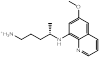
kcal/mol are primaquine[25], midodrine, phenylephrine,
and suprofen. Primaquine has the most favorable
docking score, which is a potent antimalaria agent. The side chain of
primaquine with Glu35, Asp38, and Gly496 formes
hydrogen bonds (Figure 4). In addition, primaquine is involved in cation-π interactions with Lys353. These
interactions contribute to the antiviral activity of primaquine.The important and main findings of the
study should come first in the Results Section. The tables, figures and references
should be given in sequence to emphasize the important information or
observations related to the research. The repetition of data in tables and
figures should be avoided. Results should be precise.
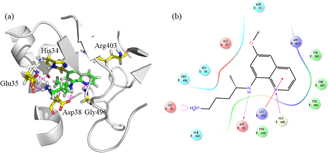
Fig.
(4). Interaction mode of primaquine with the S protein (a-b).
4. Conclusion
Based
on the S protein of SARS-CoV-2, primaquine is identified by virtual screening
of FDA-approved compound library, which has more favorable docking scores than
remdesivir. Primaquine formes hydrogen bonds with
Glu35, Asp38, and Gly496 and cation-π interactions with Lys353, which
contribute to the antiviral activity of primaquine. The study provides a
valuable basis for the development of anti-novel coronavirus drugs.
ACKNOWLEDGEMENTS
This
work was financially supported by the Innovation and Entrepreneurship Training
Program for College Students, Guizhou University of Traditional Chinese
Medicine ([2020]22), Science and Technology Planning Project of Guizhou
Province [QKHF-ZK(2021)G539], Science and Technology
Planning Project of Guizhou Province [QKHF-ZK(2023)G426].
CONFLICT OF INTEREST
The
authors declare no conflict of interest.
References
1. Arthi V, Parman J: Disease,
downturns, and wellbeing: Economic history and the long-run impacts of
COVID-19. Explorations in Economic History 2021, 79:101381.
2. Wang Q, Su M: A preliminary
assessment of the impact of COVID-19 on environment–A case study of China.
Science of the total environment 2020, 728:138915.
3. Mofijur
M, Fattah IR, Alam MA, Islam AS, Ong HC, Rahman SA, Najafi G, Ahmed SF, Uddin
MA, Mahlia TMI: Impact of COVID-19 on the social, economic, environmental and
energy domains: Lessons learnt from a global pandemic. Sustainable production
and consumption 2021, 26:343-359.
4. Gagnon JE, Kamin SB, Kearns J: The
impact of the COVID-19 pandemic on global GDP growth. Journal of the Japanese
and International Economies 2023, 68:101258.
5. Liu N, Bao G, Wu S: Social
implications of Covid-19: Its impact on general trust, political trust, and
trust in physicians in China. Social Science & Medicine 2023, 317:115629.
6. Yeoh K, Wu Y, Chakraborty S, Elhusseiny G, Gondhowiardjo S,
Joseph N, Lee A, Loong H, Msadabwe-Chikuni S, Tan B:
Global health system resilience during Encounters with stressors–lessons learnt
from cancer services during the COVID-19 pandemic. Clinical Oncology 2023, 35(4):e289-e300.
7. Feng B, Xu K, Gu S, Zheng S, Zou Q,
Xu Y, Yu L, Lou F, Yu F, Jin T: Multi-route transmission potential of
SARS-CoV-2 in healthcare facilities. Journal of hazardous materials 2021,
402:123771.
8. Lu L-Y, Feng P-H, Yu M-S, Chen M-C,
Lin AJ-H, Chen JL, Yu LH-L: Current utilization of interferon alpha for the
treatment of coronavirus disease 2019: A comprehensive review. Cytokine &
Growth Factor Reviews 2022, 63:34-43.
9. Wan S, Li M, Ye Z, Yang C, Cai Q,
Duan S, Song B: CT manifestations and clinical characteristics of 1115 patients
with coronavirus disease 2019 (COVID-19): a systematic review and
meta-analysis. Academic radiology 2020, 27(7):910-921.
10. Carvajal JJ, García-Castillo V, Cuellar SV, Campillay-Véliz CP, Salazar-Ardiles C, Avellaneda AM, Muñoz
CA, Retamal-Díaz A, Bueno SM, González PA: New insights into the pathogenesis
of SARS-CoV-2 during and after the COVID-19 pandemic. Frontiers in Immunology
2024, 15:1363572.
11. Wang X, Tang Q, Li H, Jiang H, Xu J, Bergquist
R, Qin Z: Autoantibodies against type I interferons in COVID-19 infection: A
systematic review and meta-analysis. International Journal of Infectious
Diseases 2023, 130:147-152.
12. Lanka G, Bathula R, Ghosh B, Potlapally SR: Identification of potential antiviral lead
inhibitors against SARS-CoV-2 Main protease: structure-guided virtual
screening, docking, ADME, and MD simulation based
approach. Artificial Intelligence Chemistry 2023, 1(2):100015.
13. Oany AR, Mia M,
Pervin T, Junaid M, Hosen SZ, Moni MA: Design of novel viral attachment
inhibitors of the spike glycoprotein (S) of severe acute respiratory syndrome
coronavirus-2 (SARS-CoV-2) through virtual screening and dynamics.
International journal of antimicrobial agents 2020, 56(6):106177.
14. Higgins V, Sohaei D,
Diamandis EP, Prassas I: COVID-19: from an acute to chronic disease? Potential
long-term health consequences. Critical reviews in clinical laboratory sciences
2021, 58(5):297-310.
15. Almehdi AM, Khoder G, Alchakee AS, Alsayyid AT, Sarg NH, Soliman SS: SARS-CoV-2 spike protein:
pathogenesis, vaccines, and potential therapies. Infection 2021, 49(5):855-876.
16. Riva L, Yuan S, Yin X, Martin-Sancho L,
Matsunaga N, Pache L, Burgstaller-Muehlbacher S, De Jesus PD, Teriete P, Hull MV: Discovery of SARS-CoV-2 antiviral drugs
through large-scale compound repurposing. Nature 2020, 586(7827):113-119.
17. Davis HE, McCorkell L, Vogel JM, Topol EJ: Long
COVID: major findings, mechanisms and recommendations. Nature Reviews
Microbiology 2023, 21(3):133-146.
18. Sabe VT, Ntombela T, Jhamba
LA, Maguire GE, Govender T, Naicker T, Kruger HG: Current trends in computer
aided drug design and a highlight of drugs discovered via computational
techniques: A review. European Journal of Medicinal Chemistry 2021, 224:113705.
19. Lin Y, Zhang Y, Wang D, Yang B, Shen Y-Q:
Computer especially AI-assisted drug virtual screening and design in
traditional Chinese medicine. Phytomedicine 2022, 107:154481.
20. Shehroz M, Zaheer T, Hussain T: Computer-aided
drug design against spike glycoprotein of SARS-CoV-2 to aid COVID-19 treatment.
Heliyon 2020, 6(10).
21. Theerawatanasirikul
S, Kuo CJ, Phecharat N, Chootip
J, Lekcharoensuk C, Lekcharoensuk
P: Structural-based virtual screening and in vitro assays for small molecules
inhibiting the feline coronavirus 3CL protease as a surrogate platform for
coronaviruses. Antiviral research 2020, 182:104927.
22. Irwin JJ, Tang KG, Young J, Dandarchuluun
C, Wong BR, Khurelbaatar M, Moroz YS, Mayfield J,
Sayle RA: ZINC20—a free ultralarge-scale chemical
database for ligand discovery. Journal of chemical information and modeling
2020, 60(12):6065-6073.
23. Moosavian AH: Initial
State Preparation for Simulation of Quantum Field Theories on a Quantum
Computer. University of Maryland, College Park; 2020.
24. Blair HA: Remdesivir: a review in COVID-19.
Drugs 2023, 83(13):1215-1237.
25. Zorc B, Perković I, Pavić K, Rajić Z, Beus M:
Primaquine derivatives: Modifications of the terminal amino group. European
journal of medicinal chemistry 2019, 182:111640.
Share and Cite
Ren Z. J., Zeng D.R., Wang P. Q., Wang R., Zhou B. Q., Zhang Y. The identification of potential inhibitors of SARS-CoV-2 spike protein by virtual screening FDA-approved compound library. Chronic Diseases Prevention Review 2024, 8 (29), 1. DOI: 10.54762/CDPR2024.29.1-4.
Ren Z. J., Zeng D.R., Wang P. Q., Wang R., Zhou B. Q., Zhang Y. (2024). The identification of potential inhibitors of SARS-CoV-2 spike protein by virtual screening FDA-approved compound library. Chronic Diseases Prevention Review, 8(29), 1. https://doi.org/10.54762/CDPR2024.29.1-4
Chicago/Turabian StyleRen Z. J., Zeng D.R., Wang P. Q., Wang R., Zhou B. Q., Zhang Y. 2024. "The identification of potential inhibitors of SARS-CoV-2 spike protein by virtual screening FDA-approved compound library." Chronic Diseases Prevention Review 8 (29):1. doi: 10.54762/CDPR2024.29.1-4.